 sagi
sagi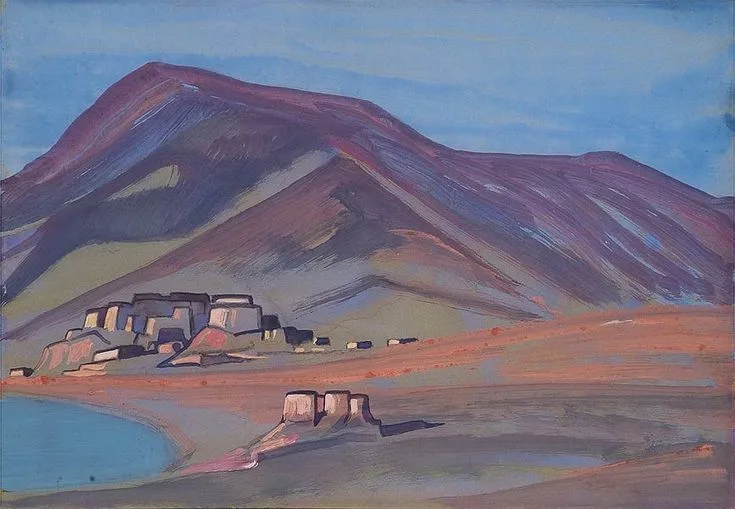
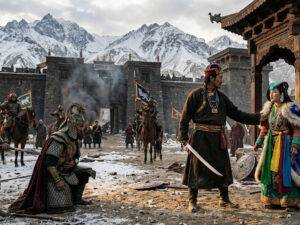
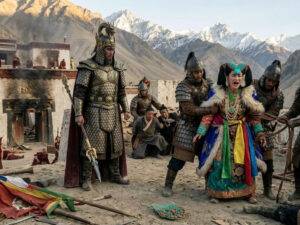
A long time ago in the city of Lhasa, a king wanted to build a temple to house an idol of the Lord Buddha. Thousands of skilled workers were employed, and the best material was bought. Under the guidance of an able architect, the work began. However, a few days after the walls were built, the workmen reached the site to find rubble.
The exquisite walls of the temple had been reduced to nothing. A horrified messenger brought the news to the architect who fainted in shock. When the king found out that the walls had fallen, he was enraged. He immediately summoned the architect to the palace. As soon as the architect was brought before the king, he began pleading and wailing for the king’s mercy. But the king ordered that the hands of the architect be cut off and he be exiled to the snowy mountains.
Another architect was hired and the work of building the temple was renewed. However, as before, the walls of the temple fell after they had been built.
The king, as before, punished the architect and exiled him. This happened six more times, and each time, the king became more and more bewildered. Finally, he went to an oracle to know more. The oracle instructed the king to build the temple on the site he had chosen, to which the king replied,
“But every time I have begun building the temple, it falls to ruins.”
The oracle told him that there was a secret behind it, and a sage in the east was the only one who knew it. The king wanted to know more, but the sage was such a mysterious man that even the oracle didn’t know his name. So the king decreed that search parties be sent out to find the sage.
Every inch of the land was searched many times by different people eager to please the king. But none of them succeeded. The search parties didn’t want to present themselves before the king and acknowledge their failure, but they had to.
Out of one such party, a young lad named Koncho stayed behind. He was returning from Amdo (a Tibetan province) when his saddle broke. He set out into the wilderness, hoping to find someone who would help him. He had not walked for very long when he happened upon a hut. Koncho tied his horse to a tree that stood near the hut and entered it. Inside the hut sat an old man.
The man had a prayer wheel in his hand and was moving it as he prayed. When he heard Koncho enter the hut, he immediately asked, “Who’s there?”
Koncho realized he was blind, and decided to lie. “I am a lama* from the east on my way to my relatives’ home. But I am forced to seek shelter under your roof as my saddle strap has broken.” The old man smiled and welcomed him into his home and told him that there was a spare strap in the house that Koncho could take.
Once Koncho had found the saddle strap, he made himself comfortable. Soon, the old man and he began talking and eventually the subject of the conversation landed on the temple being built.
“You are lucky to be from the east, which has many temples. The people of the west, however, must suffer ill fortune. They are called the land of the snow because the west cannot have a temple built on it. Yet, the foolish king insists on building one. What he doesn’t know is there is an ocean lying right under the temple land. The ocean licks up the foundation of the temple, and so it will keep falling no matter how many times it is built.”
Koncho listened breathlessly, his heart beating rapidly with excitement. The secret was being handed out to him without him having tried at all.
When Koncho didn’t reply, the old man asked whether he had fallen asleep. Koncho replied that he hadn’t. Satisfied, the old man then said, “You must ensure that no western teacher ever hears about this.” Koncho asked him why that was so, to which the old man said,
“Do you see that lake a little way from this hut? That lake has a curse on it. It is connected to the ocean and since I am the only one who knows this secret, if anyone from the west finds out, then the ocean will flood the lake and this land.”
When Koncho heard this, he immediately jumped up, took the saddle and rushed out saying, “Old man, save yourself if possible. For I am a western teacher and you have revealed the secret to me!” Securing the saddle, Koncho got on his horse and rode away.
Shocked, the old man began calling for him to stop, but his cries only drew the attention of his son, named Gyatso. Because of how hysterical the old man was, all he kept saying was,
“He stole the sangwa* (it means both ‘secret’ and ‘strap’, hence the confusion). He stole the sangwa… Kill him, he has stolen the sangwa.” Gyatso was confused as to why his father was so upset about a saddle strap being stolen. However, to placate his father, he chased after Koncho.
Soon, he caught up with Koncho and told him, “Sir, my father is very upset about you stealing his saddle strap. He has told me to kill you if necessary. Even though I don’t understand why, I must ask you to return it.”
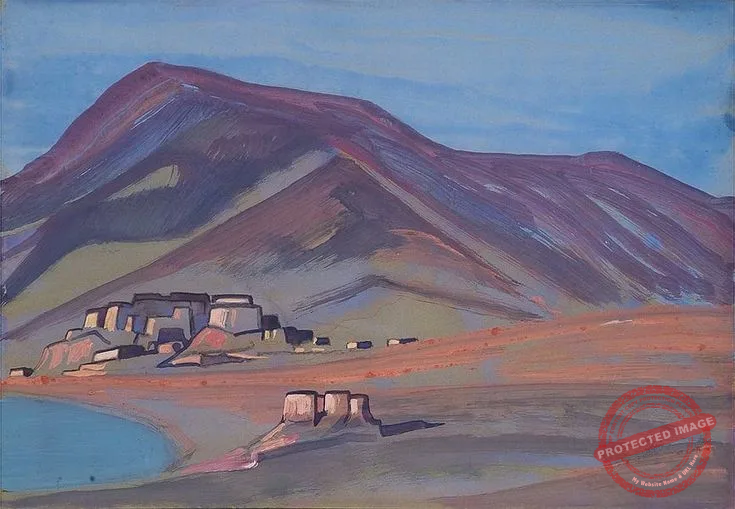
Koncho immediately understood what the old man meant to say, but he quietly undid the saddle and handed it over to Gyatso, who thanked him and returned. Koncho undid his sash and tied his saddle with it, riding as fast as he could. When Gyatso returned home, his father began wailing and they both had to run for their lives as the earth began to rumble under them and the lake began to fill up. The land was completely flooded and formed the Koko Nor, a blue lake.
The site of the temple became firm and a beautiful temple was built in the west for the first time.
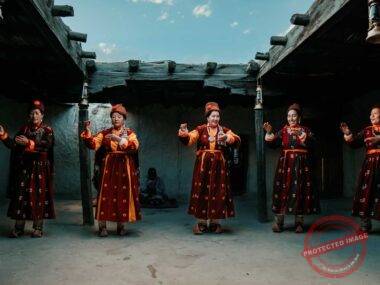
The Changpa tribe is a semi-nomadic tribe from Tibet, that resides in Changtang, Ladakh. They speak Changskhat, a dialect of Tibetan. They are primarily pastoralists, and are divided into two major subgroups – the Phalpa who are nomadic and the Fangpa who are settlers. Historically, the Changpa would migrate between Ladakh and Lhasa in China, but now even the nomadic Phalpa move within the Changtang region. They practise Tibetan Buddhism.
A folk story from Ladakh, sourced from Folk Tales from Ladakh.
Edited by Ashmeen B.
Click here to submit your Folklore.

 sagi
sagi

 Writer