 sagi
sagiA homestay trek in Ladakh is not simply a trek with a cheaper room at the end of the day. It changes the rhythm of the journey. Instead of walking from campsite to campsite, you move between inhabited villages, eat in family kitchens, sleep inside Ladakhi homes, and see how farming, livestock, religion and seasonal work shape life in the high desert.
For many travellers, the best-known options are the Sham Valley homestay trek and the Markha Valley trek. Rumbak and other villages around Hemis National Park add a very different winter wildlife dimension, while quieter village routes in western Ladakh can work well for travellers who care more about people and landscapes than high passes.
The important point is that “homestay trek” describes a style of travel, not one fixed itinerary. The right route depends on your acclimatization, fitness, season, preferred difficulty and how much comfort you expect at night.
What a Homestay Trek in Ladakh Is Really Like
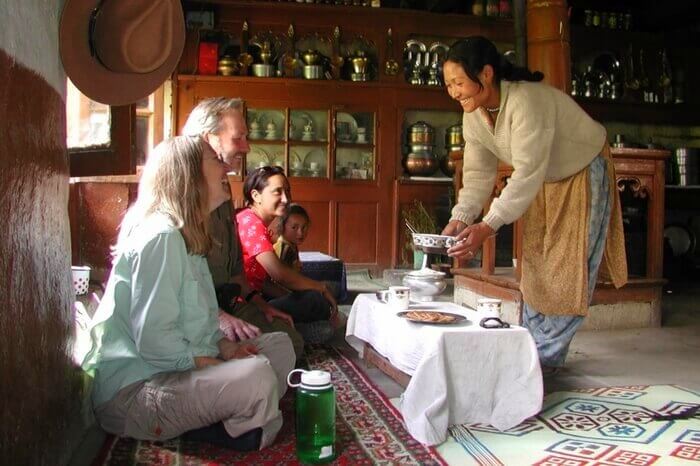
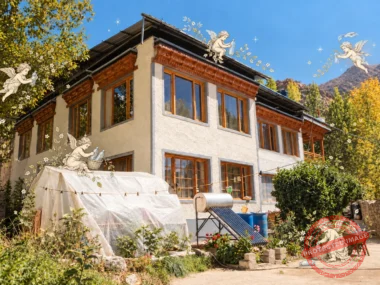
On a village-based trek, the walking day usually ends in a settlement rather than a dedicated trekking camp. Your room may be simple, often with mattresses or bedding arranged in a family home. Meals are typically prepared by the household or through a local village arrangement. Facilities vary from village to village and from house to house.
That variation is part of the experience. A homestay is not a standardized hotel product. In remote villages, expect basic bathrooms or dry-compost toilets, limited hot water, inconsistent charging opportunities and little or no mobile signal. Some homes are more comfortable than others. If you require a private bathroom, reliable electricity or a specific diet, tell your guide or operator before the trek rather than assuming every village can provide the same facilities.
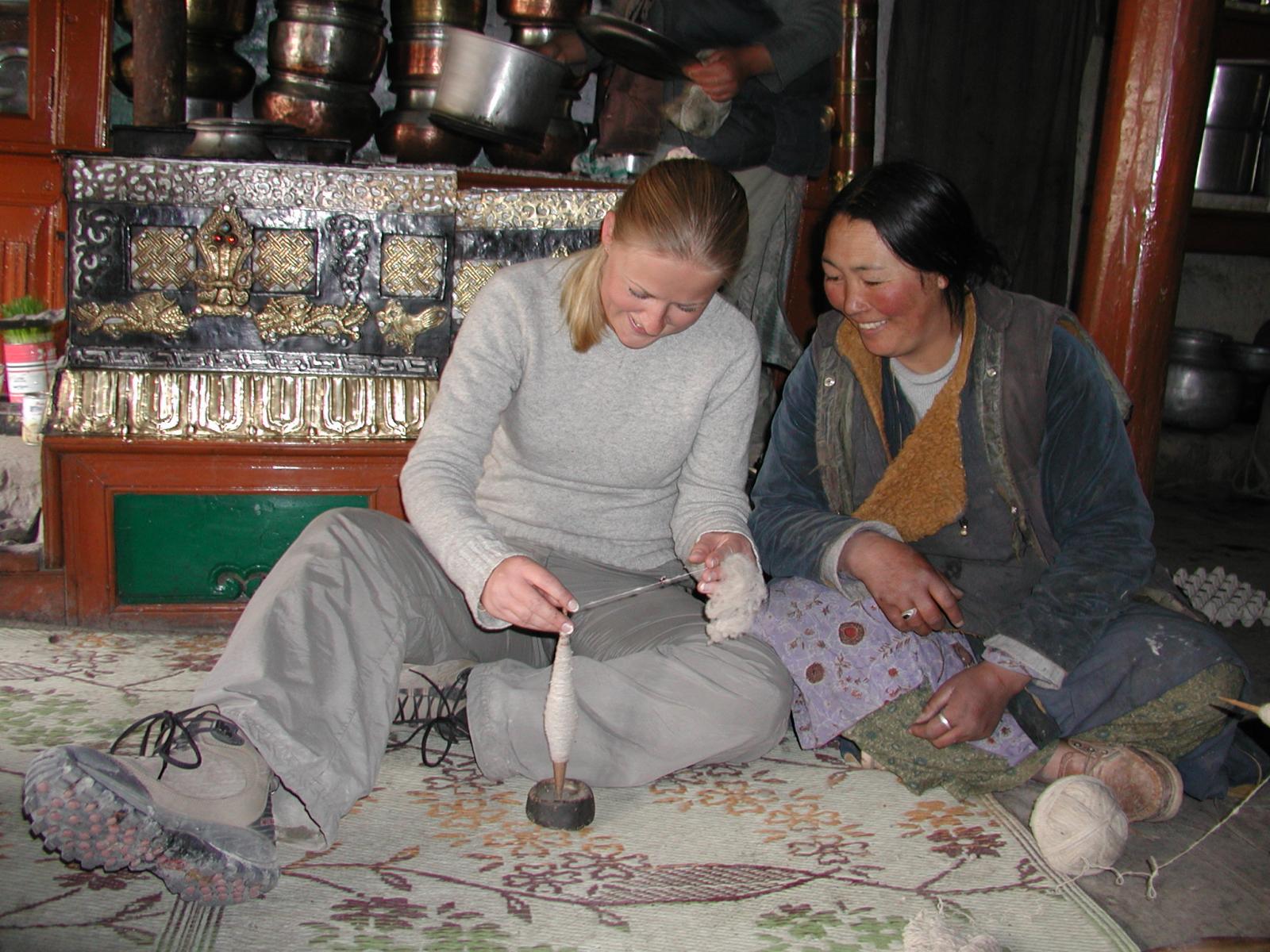
The reward is proximity to everyday life. Even without a shared language, a kitchen can become the social centre of the evening. You may see barley or vegetables being prepared, family members returning from fields, children doing homework, or older relatives tending a stove. A good homestay trek leaves space for these ordinary moments instead of treating the village only as a place to sleep.
Best Homestay Trek Routes in Ladakh
| Route | Typical character | Best for | Homestay reality |
|---|---|---|---|
| Sham Valley | Lower-altitude village walking, short passes, monasteries and farmland | First-time trekkers, shorter trips, cultural focus | One of Ladakh’s most practical village-to-village homestay areas |
| Markha Valley | Longer Himalayan trek with high-altitude sections and major pass crossings | Fit trekkers wanting a classic Ladakh route | Village homestays are possible on several stages, but some high sections require non-homestay accommodation |
| Rumbak / Hemis National Park | Wildlife landscape close to Leh, especially important in winter | Wildlife travellers and shorter village stays | Homestays can be a base for local wildlife tracking rather than a continuous summer-style trek |
| Western Ladakh village routes | Quieter walking between traditional settlements | Travellers prioritizing village life over famous high passes | Availability is more variable and should be confirmed locally |
Sham Valley: the easiest place to understand the homestay-trek idea
Sham Valley is often the most straightforward introduction to trekking with village stays. Routes commonly connect places such as Likir, Yangthang, Hemis Shukpachan and Temisgam, although the exact start, finish and number of walking days can be adjusted.
The landscape is still unmistakably Ladakhi, but the route is generally lower and less committing than Markha Valley. You walk between cultivated villages, cross relatively modest passes, and can combine the trek with monasteries and the lower Indus Valley. This makes Sham especially useful for travellers who want a trekking experience without building the entire trip around a 5,000-metre pass.
“Easy” does not mean altitude-free. Leh itself is already high, and walking above the Indus Valley still requires acclimatization. Spend time adjusting before the trek and avoid using the shorter route as an excuse to rush directly from your flight onto the trail.
Markha Valley: homestays inside a bigger mountain journey
Markha Valley is a different proposition. It is a longer and more physically demanding trek, with villages such as Skiu, Markha and Hankar providing opportunities for homestay accommodation on many itineraries. The route also climbs into high country where permanent village homes are no longer available.
This distinction matters. A Markha itinerary can be strongly homestay-based without being homestay-only. Around Nimaling and on itineraries involving the Kongmaru La area, trekkers may need a tented camp, seasonal camp or another form of high-altitude accommodation. Anyone selling Markha as a seamless chain of family homes from beginning to end is simplifying the geography.
Choose Markha if you want the village experience to be part of a classic Himalayan trek rather than the sole purpose of the journey. It suits trekkers who are properly acclimatized and comfortable with longer days, river-valley walking and substantial altitude gain.
Rumbak and Hemis National Park: a different kind of homestay journey
Rumbak is well known because of its location in the Hemis National Park landscape and its connection with winter snow-leopard tracking. In winter, a village homestay can function as a base while local trackers and guides search surrounding slopes and valleys for wildlife signs.
This is not the same travel pattern as walking through Sham Valley in summer. Winter days can involve long periods outside in extreme cold, repeated observation from ridges or viewpoints and several nights in the same village. The homestay becomes part of the wildlife experience: a warm base inside a living community rather than simply the next stop on a linear trail.
If snow leopard is your priority, treat it as a specialist wildlife trip. Sightings are never guaranteed, and local tracking knowledge matters more than marketing promises.
Homestay Trek vs Camping Trek
Neither style is automatically better. They serve different journeys.
Homestay trekking works best where settlements fall naturally along the route. It reduces the need to move a full private camp every day and directs more of the overnight spending into villages. It also creates more contact with residents and lets travellers see how Ladakh’s inhabited valleys function beyond the road network.
Camping trekking remains essential on routes where there are no villages at the right intervals, where high camps are part of the itinerary, or where a group needs a more controlled accommodation and food system. Some of Ladakh’s best treks are necessarily camping treks; others work well as hybrids.
The most sensible itinerary follows the geography rather than forcing one accommodation model onto the entire route.
What You Eat in a Ladakhi Homestay
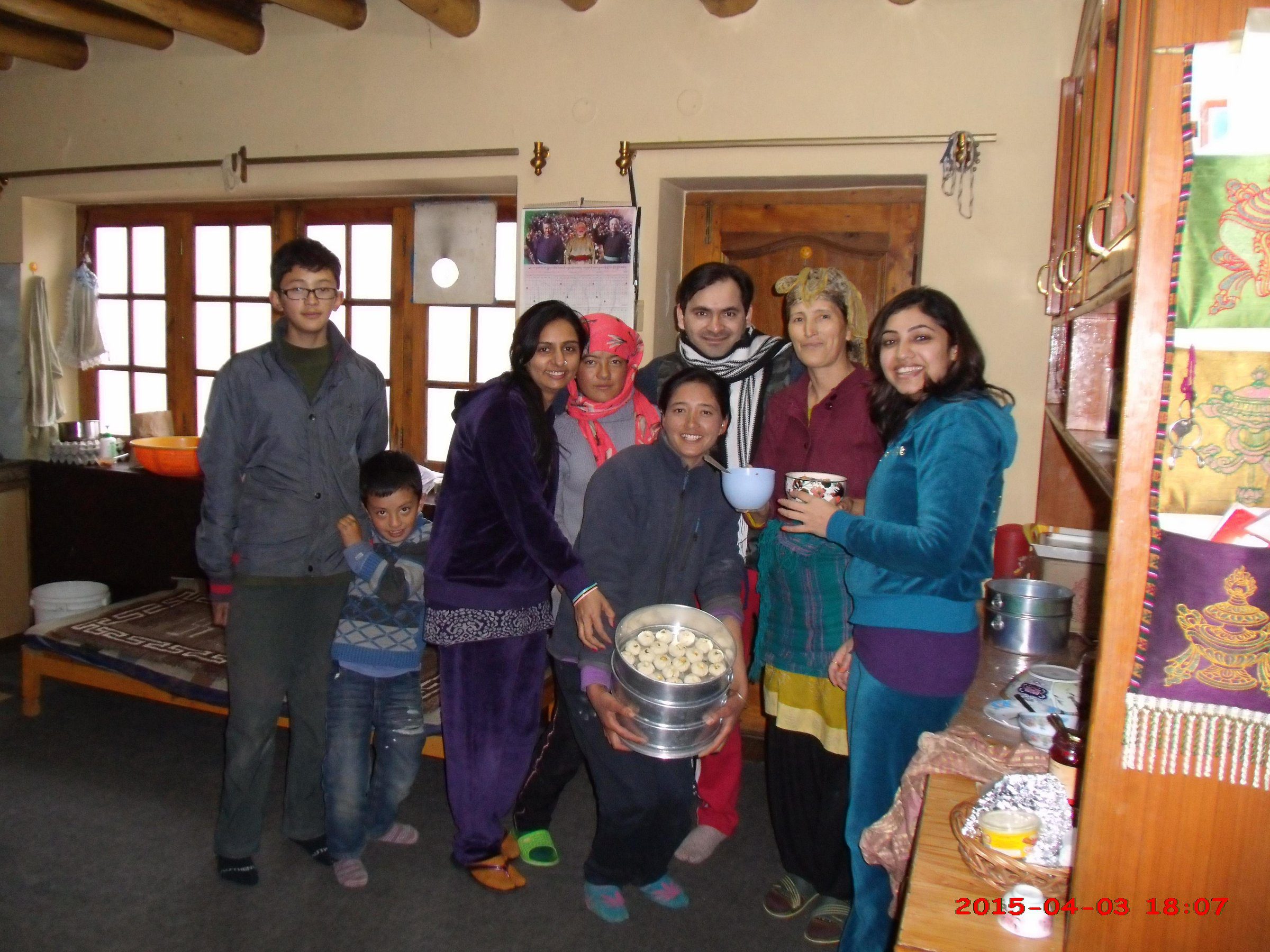
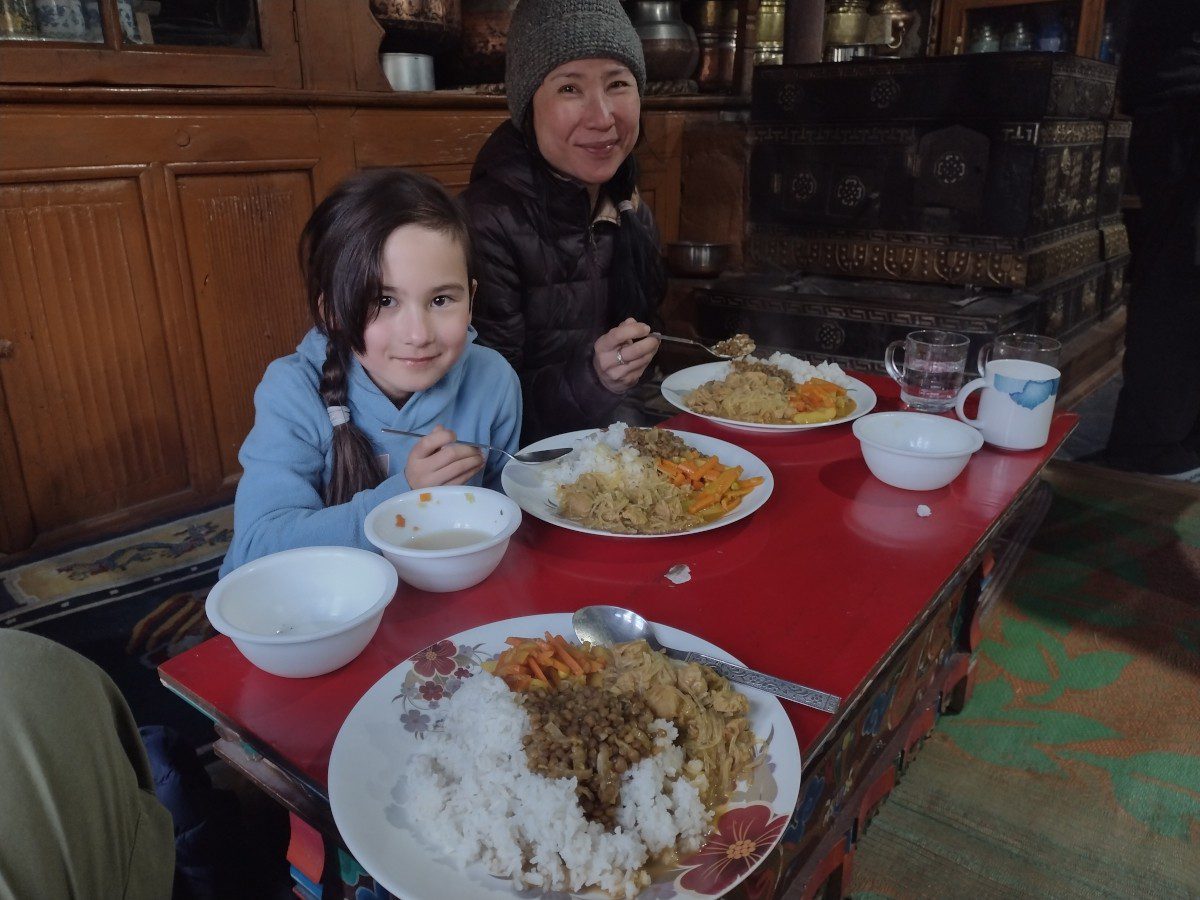
Food differs by household and season. Expect simple, filling meals rather than a fixed restaurant menu. Depending on the home, ingredients and preferences, you may encounter rice, dal, vegetables, noodles, thukpa, skyu, chutagi, momos, bread, roasted barley products, tea or butter tea.
Vegetarian travellers are generally easier to accommodate than people with complex medical or allergy requirements, but never rely on assumptions. Tell the organizer in advance about allergies, gluten restrictions, vegan requirements or foods you cannot eat. In a small village kitchen, substitutions that are easy in Leh may not be available.
Carry personal trail snacks if you need a particular energy intake during the day. A packed lunch may be simple, and variety should not be the main reason to choose a homestay trek.
Bathrooms, Electricity, Heating and Comfort
Remote Ladakh requires flexible expectations. Traditional dry or compost-style toilets remain common in villages. Some houses have improved bathrooms, while others retain older arrangements. Hot water can be limited and may need to be heated rather than supplied continuously.
Electricity and solar power have improved in many places, but reliable charging should never be assumed on a multi-day trek. Bring a power bank and keep essential devices charged before leaving Leh. Mobile coverage is also uneven; some valleys have signal while nearby villages do not.
Nights can be cold even in summer. Bedding is normally provided, but travellers who feel the cold easily may prefer to carry a light sleeping-bag liner or sleeping bag depending on season and route. In shoulder months, ask specifically about night temperatures and heating before departure.
When to Choose a Homestay Trek
For most village-to-village summer routes, the main trekking period is from late spring into early autumn, with the most reliable window depending on snow, road access, river levels and the specific route. Sham Valley can often work earlier and later than higher routes. Markha Valley’s high sections need more careful seasonal judgment.
October can be beautiful but colder, with shorter days and reduced services in some villages. Winter homestay travel belongs in a separate category, especially for wildlife-focused trips around Rumbak. Do not assume that a summer itinerary simply continues unchanged once snow and severe cold arrive.
How to Choose Between Sham and Markha
Choose Sham Valley if your priorities are village life, shorter walking days, a lower-altitude route and an easier first trek in Ladakh. It is also easier to combine with a road itinerary before or after the trek.
Choose Markha Valley if you want a larger mountain journey and are comfortable with more demanding days and higher elevations. The homestays are one part of the experience alongside the valley, high pastures and pass crossings.
Choose Rumbak if your main interest is winter wildlife and you are comfortable staying in one area while tracking rather than completing a point-to-point trek.
How Homestays Fit Ladakh’s Tourism Policy
Ladakh’s administration has been formalizing homestay tourism as part of its rural-tourism strategy. The Ladakh Homestay Policy 2023 describes homestays as a way to strengthen the rural economy while promoting responsible and sustainable tourism. The policy also recognizes rural and border areas and provides separate implementation responsibilities inside protected areas.
In March 2026, the Tourism Department launched a Holistic Homestay Support Framework focused on readiness, quality assurance and sustainability for homestays across Ladakh. That matters because homestays are no longer only an informal trekking tradition; they are increasingly part of a wider village-tourism system.
For travellers, the practical lesson is simple: staying locally can contribute directly to village households, but responsible tourism depends on more than where you sleep. Use water carefully, minimize packaged waste, follow the household’s customs, and avoid treating a family home as if it were a hotel with unlimited resources.
Booking a Homestay Trek
Popular routes can be arranged through a local trekking operator or guide, and some villages also accept travellers through community networks. For a multi-day trek, booking the route rather than only the room is usually the safer approach. Transport to the trailhead, village availability, guide arrangements, seasonal closures and backup plans all matter.
Before confirming, ask:
- Which nights are genuine family homestays and which nights use camps or guesthouses?
- What is the highest sleeping altitude and highest pass?
- How many acclimatization days are expected before departure?
- Are meals and packed lunches included?
- What toilet and washing facilities are typical on this route?
- Can dietary restrictions be handled in every village?
- What happens if a planned homestay is closed or full?
- Is luggage carried by you, by an animal, or transferred another way?
A clear answer to these questions tells you much more than a generic promise of an “authentic village experience.”
What to Bring
Pack for the trek first and the homestay second. Good footwear, sun protection, warm layers, a refillable bottle, personal medicines and a headlamp remain essential. Add toiletries that do not depend on a full bathroom, a power bank, and enough cash for small local expenses where digital payment may not work.
A small gift is not required. Respect, patience and genuine interest are more useful. Ask before photographing people or private spaces. Follow the family’s lead about shoes, seating and meal routines, and remember that the house continues to be a home while you are there.
Frequently Asked Questions
Is a homestay trek in Ladakh suitable for beginners?
Yes, if the route is chosen carefully. Sham Valley is usually a better first homestay trek than a high-pass Markha itinerary. Fitness and acclimatization still matter.
Can the Markha Valley Trek be done entirely in homestays?
Not always. Several village stages can use homestays, but high-altitude sections may require tents, seasonal camps or other accommodation. Ask for the night-by-night plan.
Are Ladakh homestays comfortable?
They can be warm and welcoming, but standards vary. Expect simpler facilities than a Leh hotel, especially for bathrooms, hot water, charging and mobile coverage.
Do homestays include food?
Many trekking homestays provide dinner and breakfast, and some arrangements include a packed lunch. Confirm what is included before departure because practices vary.
Do I need a guide?
Some experienced trekkers walk established routes independently, but a local guide adds route judgment, language support, village coordination and safety value. For winter wildlife trips, specialist local tracking knowledge is particularly important.
What is the best homestay trek in Ladakh?
There is no single best route. Sham Valley is strongest for a shorter and easier village-based trek; Markha is better for a major Himalayan journey with homestay stages; Rumbak is distinctive for winter wildlife travel.
Sources and Freshness
This guide was updated in September 2026. Current policy context was checked against the Administration of Union Territory of Ladakh’s Ladakh Homestay Policy 2023 and the Tourism Department’s March 2026 Holistic Homestay Support Framework. Route conditions, individual homestay availability and village services can change, so confirm the current situation locally before starting a trek.

 sagi
sagi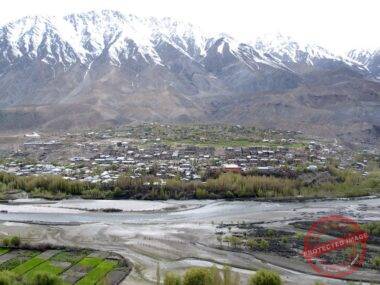
 Writer