 Singay Namgyal
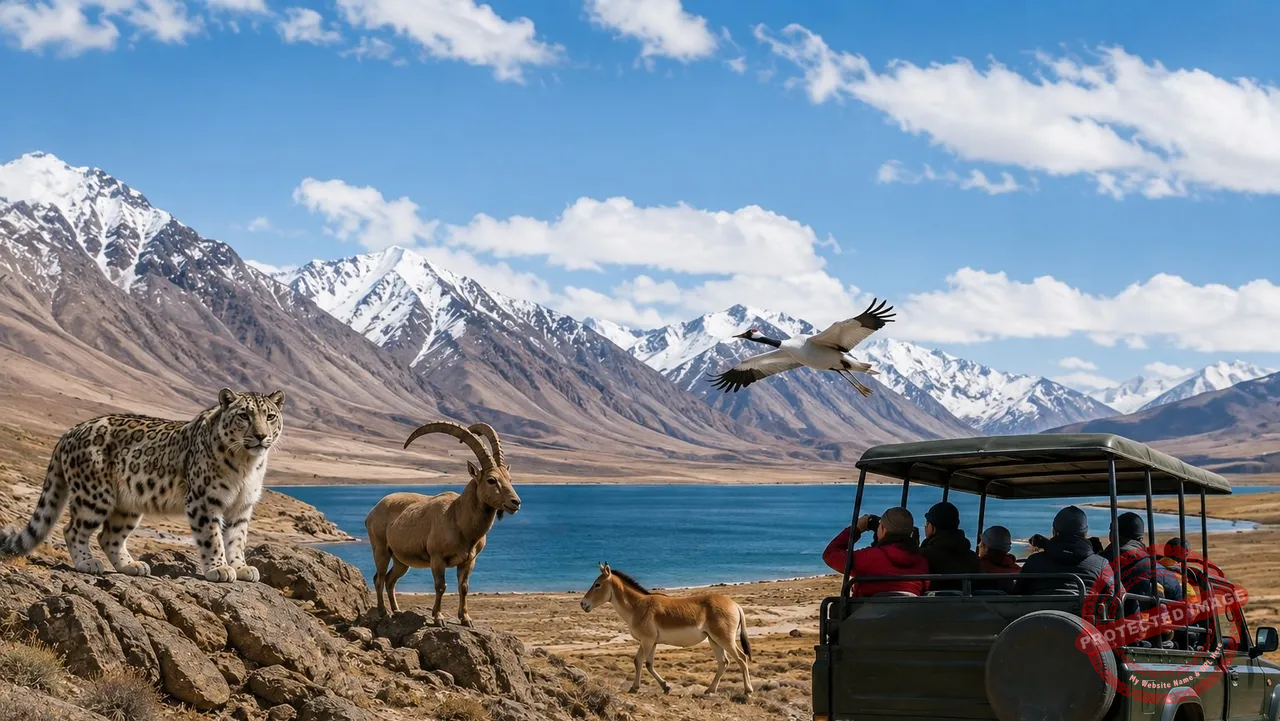
In a major push to sustainable eco-tourism and wildlife conservation, the Lieutenant Governor of Ladakh, Vinai Kumar Saxena has approved the introduction of India’s first high-altitude wildlife safari along Ladakh’s renowned snow leopard and birdwatching trails.
The initiative, aimed at offering visitors a guided opportunity to experience the Union Territory’s unique biodiversity, will feature specially designed open-back jeep safaris operated by trained local drivers and wildlife guides. The safari is expected to enhance tourist experiences while ensuring the protection of Ladakh’s fragile ecosystem
The decision was taken during the first Governing Body meeting of the newly constituted Snow Leopard and High-Altitude Nature (SHAN) Conservation Society, chaired by the Lieutenant Governor.
Officials said the Forest Department has been directed to identify and develop safari routes across Hemis National Park, Changthang Wildlife Sanctuary, Karakoram Wildlife Sanctuary, as well as wildlife-rich landscapes in Nubra, Zanskar, Sham, Kargil, and Drass, which are known for snow leopard sightings and rich bird diversity.
The guided safari model, similar to those operating in national parks such as Kaziranga and Ranthambore, seeks to curb illegal off-roading, reduce human disturbance to wildlife and promote responsible tourism practices.
As part of the initiative, 20 local youths will be trained in birdwatching, bird identification and bird-spotting techniques. They will be equipped with binoculars and other essential gear to serve as trained nature guides. In addition, 10 birdwatching hides will be established at major birding hotspots across Ladakh to facilitate wildlife observation without disturbing natural habitats.
Ladakh is considered one of the country’s richest high-altitude wildlife regions. According to official figures, it is home to 477 snow leopards, accounting for nearly two-thirds of India’s estimated population of 718. The region also supports more than 38 mammal species, 340 bird species, and around 1,800 vascular plant species, making it one of the country’s most significant biodiversity hotspots
The SHAN Conservation Society, constituted on June 16, has been tasked with preparing a comprehensive roadmap for community-led wildlife conservation, waste management, plastic-free tourism, sustainable livelihoods and responsible eco-tourism across Ladakh.
Addressing the meeting, LG Saxena described Ladakh’s high-altitude ecosystem and wildlife as its “greatest natural asset” and stressed that conservation efforts can succeed only when local communities become active stakeholders.
“Through SHAN, we are creating a model that integrates wildlife conservation, responsible eco-tourism, environmental education, empowering local communities and creating sustainable livelihoods. Our vision is to establish Ladakh as a global example of community-led conservation and responsible high-altitude mountain tourism,” he said.
The Governing Body also approved a series of measures to strengthen environmental protection and community participation. These include installing 300 colour-coded waste bins across 40 villages, procuring portable cart-based dustbins for waste segregation, and launching a plastic-free tourism campaign throughout Ladakh.
To promote environmental awareness among children, SHAN Wildlife Clubs will be established in 50 government schools, with each school receiving Rs 30,000 to organise wildlife excursions and conservation activities.

 Singay Namgyal

 Writer