 sagi
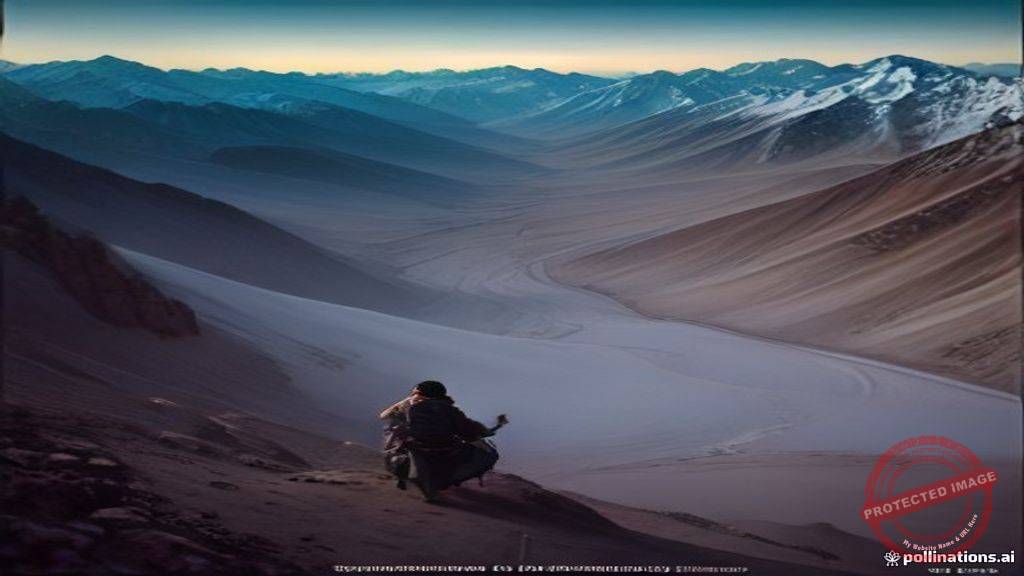
sagiMost people see Ladakh as a backdrop for adventure photography. They notice the jagged peaks, the prayer flags, and that stark, lunar terrain. But if you look past the tourist postcards, you find a history as rugged and unforgiving as the mountains themselves.
The history of Ladakh isn’t just about ancient kings or mountain passes. It is a story of survival, trade, and the constant friction between empires.
The Early Days: A Melting Pot of Cultures
Long before it became a point of contention between modern nations, Ladakh acted as a bridge. It sat right in the middle of the Silk Road.
Travelers moving between India, Tibet, and Central Asia had to pass through here. That traffic brought more than just spices and silk. It brought Buddhism, which filtered in from Kashmir and India as early as the 1st century. Later, it became a stronghold for Tibetan culture.
You can still see the remnants of these migrations in the faces of the people and the architecture of the monasteries. It was never an isolated hole in the wall; it was a transit lounge for the ancient world.
The Rise of the Namgyal Dynasty
By the 10th century, Ladakh had established itself as an independent kingdom. But it really hit its stride in the 17th century under the Namgyal dynasty.
King Sengge Namgyal put Ladakh on the map. He was an ambitious leader who expanded the borders and built the iconic Leh Palace. If you visit Leh today, that looming structure on the hill is his legacy.
He turned Ladakh into a regional power. It was a golden age, marked by a massive surge in monastery construction and a consolidation of power that kept outside invaders at bay for a while.
Trade, Conflict, and the Dogra Invasion
The kingdom’s wealth proved to be its undoing. Ladakh controlled the supply of pashmina wool, which was essentially the gold of the high mountains. Naturally, everyone wanted a piece of that trade.
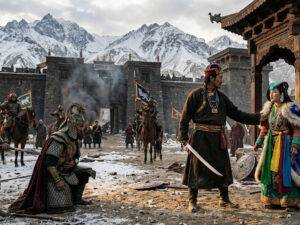
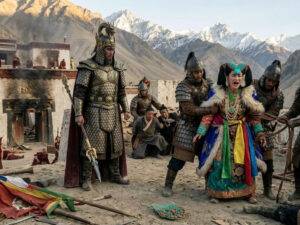
The independence of the Ladakhi kingdom came to an abrupt end in 1834. General Zorawar Singh, leading the Dogra forces from Jammu, swept into the region. It was a brutal campaign. The high altitude didn’t stop them, and the Ladakhi forces, while brave, were no match for the Dogra military machine.
Ladakh was folded into the princely state of Jammu and Kashmir. When the British later formalized the borders of India, Ladakh remained tied to this administrative unit. That decision set the stage for the geopolitical headaches that define the region today.
The Modern Era and Geopolitical Tension
Fast forward to 1947. Partition changed everything. The border lines drawn by bureaucrats in London suddenly split families and disrupted centuries-old trade routes.
Since then, the history of Ladakh has been dictated by the standoff between India, Pakistan, and China. The Siachen Glacier and the Line of Actual Control aren’t just lines on a map to the people living here. They are the daily reality.
The region shifted to a Union Territory in 2019. It was a massive change in how the area is governed. It moved from being a remote corner of a state to the direct responsibility of the central government.
Why the History Matters Today
You can’t understand why Ladakh feels different from the rest of India without looking at this timeline. It is a fusion of Tibetan Buddhism and Indian administrative history, pinned against the backdrop of the Karakoram and Himalayan ranges.
The culture here is resilient. It survived the Dogra invasion, the partition, and the rapid influx of modern tourism. People often mistake the quiet nature of the locals for passivity, but that is a mistake. Living at 11,000 feet teaches you to be tough.
When you walk through the streets of Leh or sit in a monastery in Hemis, you are standing on ground that has been fought over for a thousand years. It’s a place that has seen empires rise and fall while the mountains stayed exactly where they were.
If you plan to visit, do yourself a favor. Don’t just look at the view. Read up on the local history before you arrive. It makes the silence of the high desert feel a whole lot heavier.
Key Historical Takeaways
- Silk Road Influence: Ladakh functioned as a critical intersection for trade between Asia and India for centuries.
- Sengge Namgyal’s Legacy: The 17th-century expansion remains the high-water mark for Ladakhi political power.
- Strategic Importance: The region’s value has always been tied to its control over trade routes and, more recently, its proximity to disputed borders.
- Cultural Resilience: Despite constant shifts in political control, the core of Ladakhi identity remains firmly rooted in its Tibetan Buddhist heritage.
Understanding the history of Ladakh changes how you see the region. It isn’t just a destination for trekking; it’s a living record of a very long, very complicated struggle to survive at the top of the world.


 sagi
sagi


 Writer