 sagi
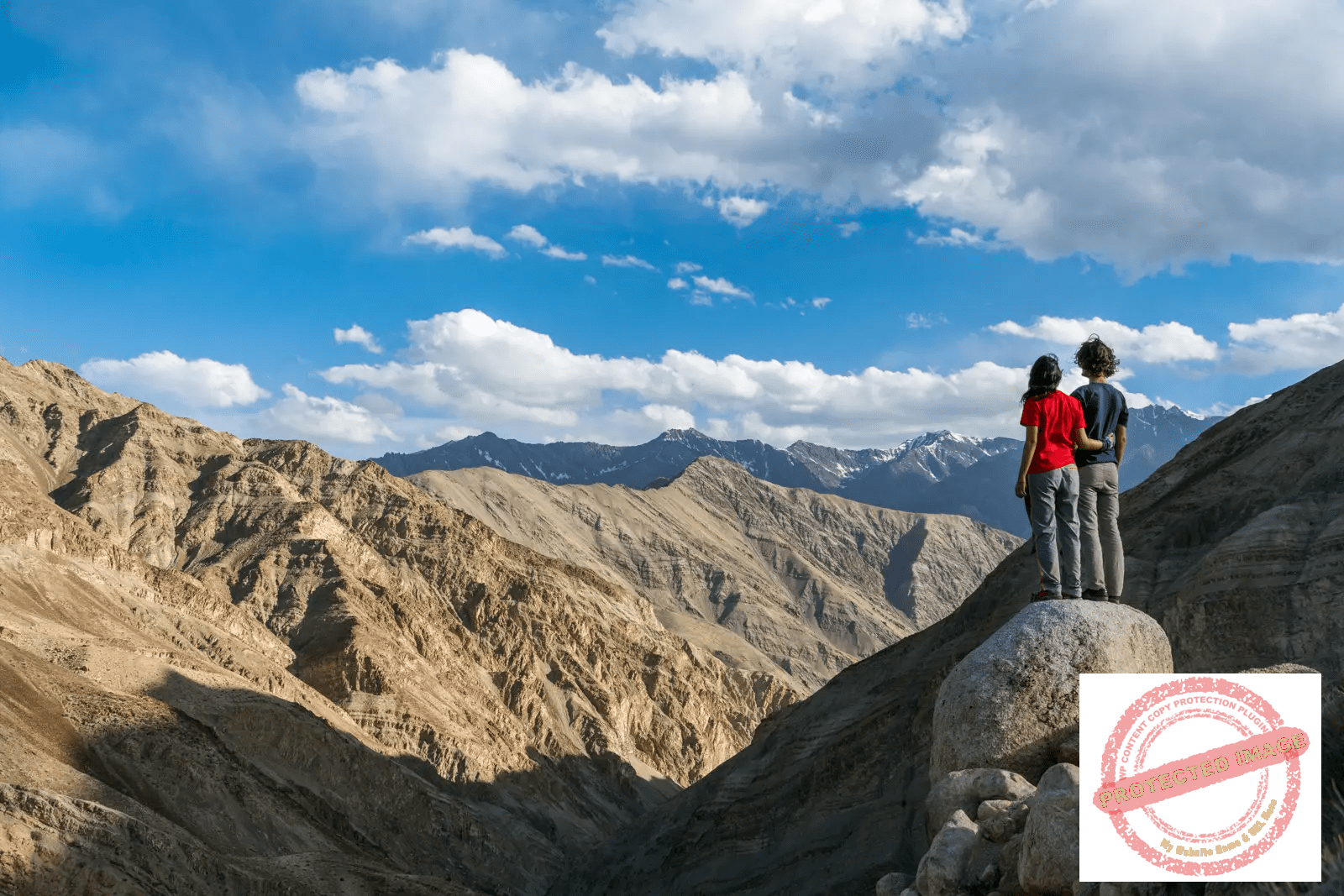
sagiSham Valley is sometimes sold as the easy trek in Ladakh. That is true, but it is not the most interesting thing about it.
The distances are modest. The passes are lower than on Ladakh’s bigger trekking routes. There are villages at the end of the day instead of a camp pitched in an empty valley. You can walk for a few hours, arrive before evening, drink tea in someone’s kitchen, and still have enough energy to notice where you are.
That slower rhythm is the reason to come.
Why walk the Sham Valley Trek?
The classic route moves through the lower Indus region west of Leh, linking villages such as Likir, Yangthang, Hemis Shukpachan and Tingmosgang. Depending on where you begin and finish, it usually works well as a three- to five-day trek.
It is often recommended to first-time trekkers, families and travellers who do not want their entire Ladakh journey to become a contest with altitude. But “easy” can be misleading. You still walk on dry mountain trails, cross small passes, feel the sun, and wake to cold mornings. What changes is the mood. There is less urgency.
You are never very far from ordinary Ladakhi life.
A route made of villages, not highlights
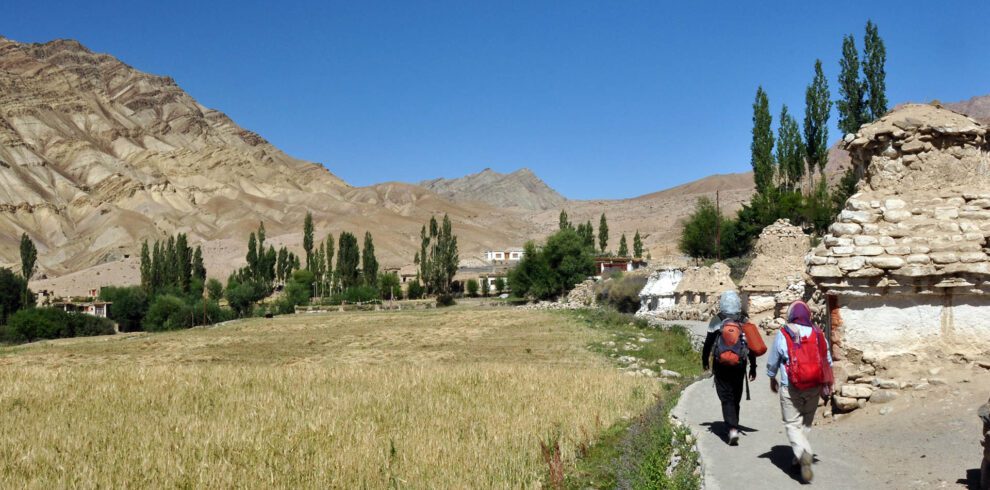
Likir is an easy place to begin. The monastery sits above the village, large enough to dominate the view but still part of everyday life below. From here the trail leaves the road and starts moving between fields, bare slopes and small settlements.
Yangthang feels quieter. Hemis Shukpachan is greener than the surrounding mountains suggest it should be. Tingmosgang, when included, gives the journey a slightly different ending: more history, more cultivated land, more sense that the trek has slowly returned you to the inhabited world.
None of these places needs to perform very hard for visitors. That is part of their appeal.
There are prayer walls, irrigation channels, barley fields, whitewashed houses, children walking home, dogs asleep in the shade, and kitchens that become the warmest room in the house after sunset. On a longer and more dramatic trek, these things can become background. In Sham Valley, they are the journey.
What the walking is actually like
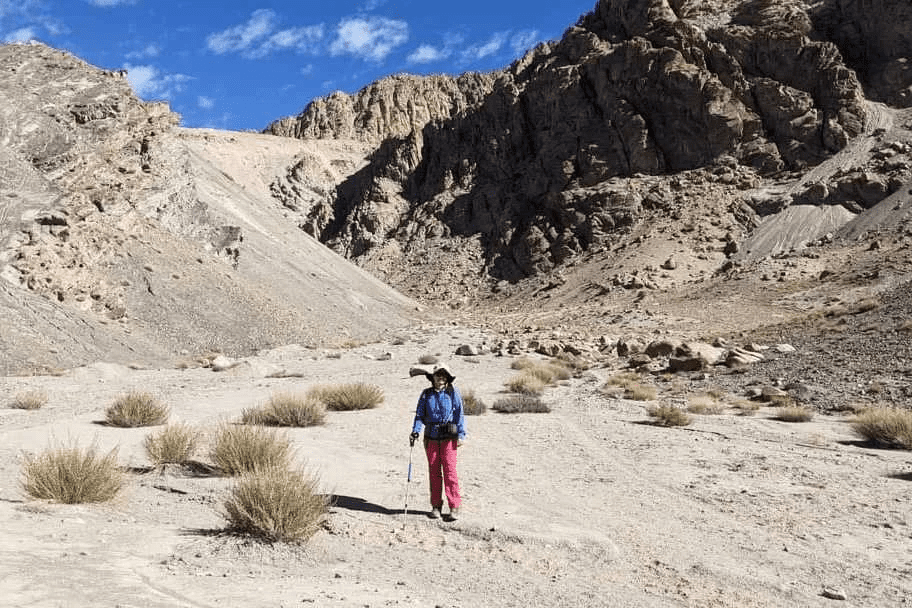
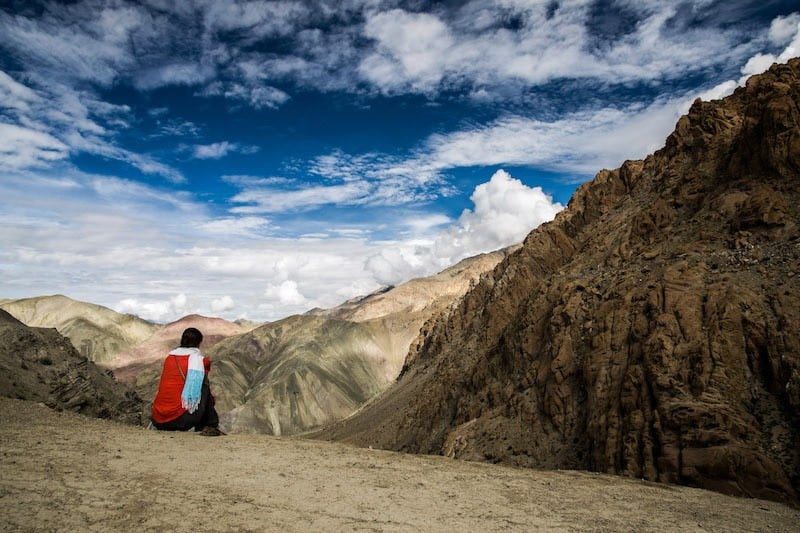
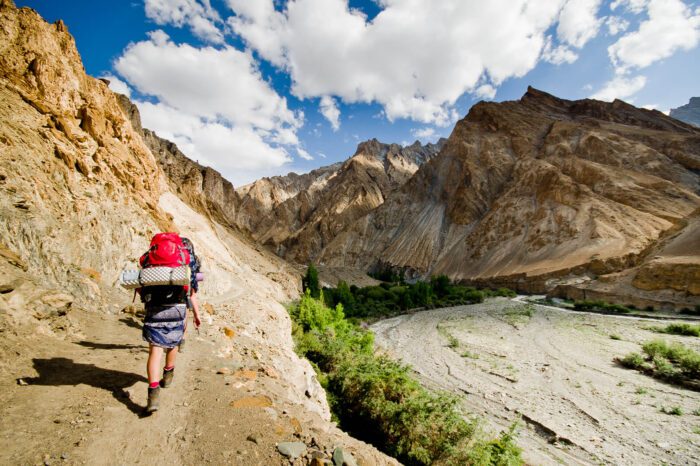
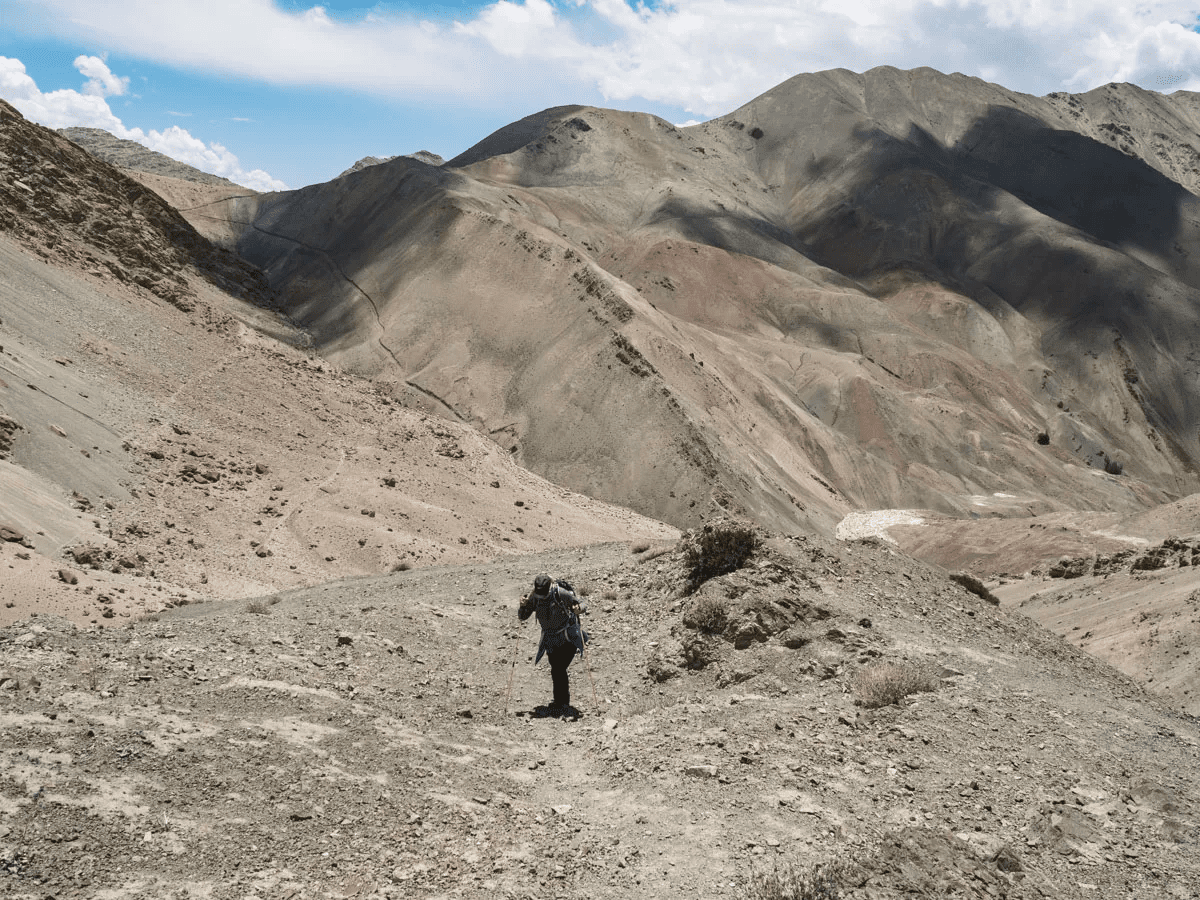
Sham Valley is lower than many famous Ladakh trekking routes, but it is still Ladakh. Much of the walking sits around the 3,000-metre range and rises over small passes between villages. The trail is dry, exposed and often dusty. Shade can be rare in the middle of the day.
Most days are short enough that there is no reason to rush. Four or five hours of walking can already feel complete when the sun is strong. A slower departure, a long tea stop, or arriving early enough to sit outside the homestay usually makes the trek better rather than less ambitious.
This is one of the few Ladakh treks where shortening a day does not feel like missing the point.
Three days or five?
A short version works if you mainly want a taste of village trekking. A longer version makes more sense if you enjoy small detours, monasteries, unhurried mornings and time inside the villages rather than simply walking through them.
- 3 days: a compact introduction to the classic Sham Valley walking route.
- 4 days: more comfortable pacing with time for village life and monastery stops.
- 5 days: the best choice if you want the trek to feel like travel rather than an itinerary.
LOTPL can arrange the route in either direction and adjust the walking days around your pace, arrival schedule and onward plans in Ladakh.
Homestays: simple, warm, variable
Sham Valley works because you do not need to carry a complete camp from village to village. At the end of the day, there is usually a family home or simple village stay waiting.
It is better not to imagine a standardized “homestay product”. Rooms, toilets, hot water, charging and meal arrangements vary from house to house. Some places feel almost like small guesthouses. Others are much closer to staying in a family home.
That variation is not a flaw. It is the reason the experience still feels personal.
Dinner may be simple: rice, dal, vegetables, noodles, momos, thukpa, or whatever is practical in the house that evening. Breakfast is usually equally uncomplicated. If you have dietary requirements, tell us before the trek. Vegetarian food is generally straightforward to arrange, but very specific diets should never be left until arrival.
The monasteries are better when they are not treated as a checklist
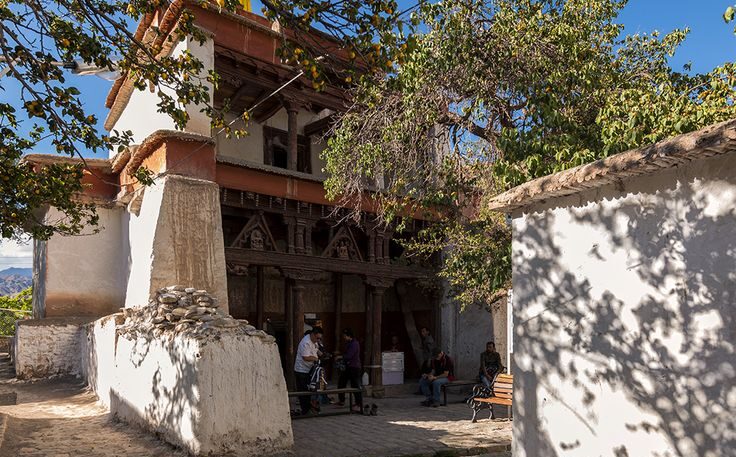
Likir Monastery is the obvious beginning. Rizong can be added with more time. Alchi is not on the trekking trail itself, but it fits naturally before or after the trek if you are travelling through the lower Indus Valley.
It is tempting to turn each one into a box to tick. Sham Valley is nicer when you do the opposite.
Go inside if the doors are open. Sit down for a few minutes. Look at the old wall paintings without needing to understand every figure. Watch who comes and goes. In Ladakh, monasteries are not ruins that happen to contain religion. They remain part of the landscape because people still use them.
When to go
Sham Valley has a wider trekking season than Ladakh’s higher routes. Spring can be cool and quiet. Early summer brings longer days. July and August are warmer and busier. September often has the loveliest light, colder mornings and a feeling that the short Ladakhi summer is already beginning to close.
For most travellers, the useful window is roughly spring through early autumn, but exact trail and homestay conditions vary from year to year.
Winter is a different journey. Villages remain, of course, but trekking services become limited and temperatures change the character of the route completely. If you are thinking about Sham in winter, it is better to plan it as a winter village trip rather than assume the normal trekking pattern continues unchanged.
Do you need a guide?
Not always. The route passes through inhabited villages and is far less remote than many Ladakh treks.
Still, a local guide changes the experience. The useful part is not simply navigation. It is knowing which path is currently better, where a homestay is open, how to speak with a family, when a monastery may be accessible, and when a small change to the day makes more sense than following an old itinerary exactly.
If you prefer to walk independently, we can also arrange only the parts you need, such as transport to the trailhead and pickup at the end.
Who this trek suits
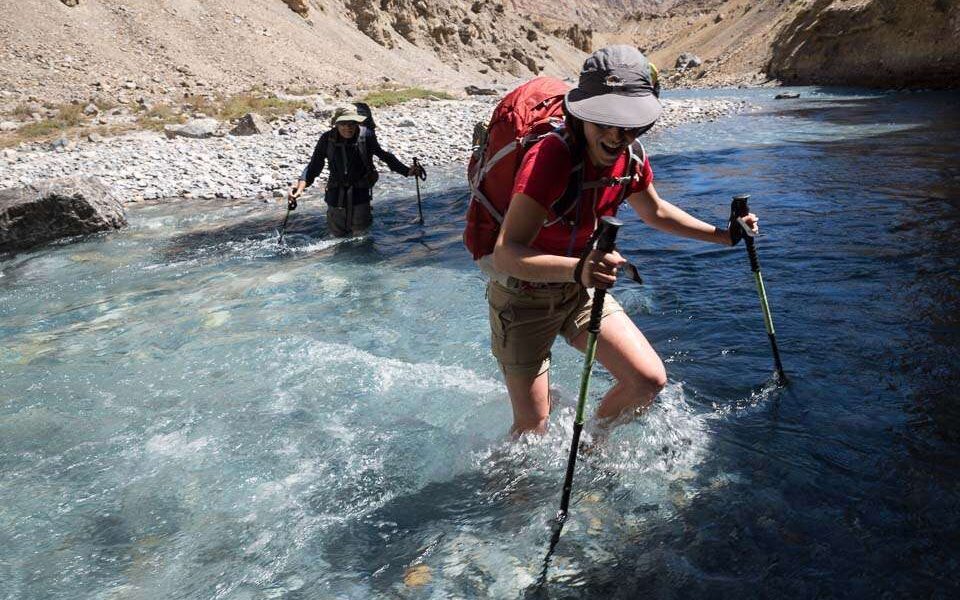
Sham Valley is a good choice if you want to walk in Ladakh but do not necessarily want a major expedition.
It suits travellers who prefer villages to camps, conversation to mileage, and a shower when available rather than a summit at any cost. It also works well as a first Ladakh trek before attempting something higher and longer later in the trip.
It is less suitable if what you really want is wilderness. You will see roads from time to time. You will walk near cultivated land. Mobile signal may appear and disappear. A village dog may follow you for twenty minutes. Someone may offer tea when you thought you were making good time.
That is Sham Valley.
Sham Valley compared with Markha
If you are deciding between the two, the simplest distinction is this: Sham is smaller and more intimate; Markha is bigger and more mountainous.
Markha gives you longer days, higher passes and a stronger sense of being deep inside the mountains. Sham gives you more time inside the villages themselves. Neither is a lesser version of the other.
If this is your first trek in Ladakh, or if you have only a few days, Sham is often the more sensible choice.
Planning the trek with LOTPL
We arrange private Sham Valley treks rather than forcing every traveller into one fixed departure pattern. A typical trip can be built around three to five walking days, with private transport from Leh, village homestays, a local guide if wanted, and pickup at the end of the route.
Some travellers want the classic Likir–Yangthang–Hemis Shukpachan line. Others want to include Tingmosgang, Rizong or Alchi. Some want a guide every day. Others mainly need reliable transport and someone to make sure the village stays are arranged.
Tell us how many days you have, how much you normally walk, and whether you prefer comfort, solitude, monasteries or simply slow travel. We will shape the trek around that rather than the other way around.
Sham Valley does not need to become a grand adventure to be worth doing.
There are bigger valleys in Ladakh, higher passes, longer treks and more dramatic photographs. Sham is quieter than that. You walk to the next village, wash the dust from your face, sit down in a kitchen, and realize the day was already enough.
Compare routes, seasons and difficulty in our Ladakh trekking guide.

 sagi
sagi
 Writer