 sagi
sagiThe first thing I heard was the call to prayer.
It was February 2010, before sunrise, in Chiktan. The mosque stood directly behind the house where I was staying, close enough for the azan to enter the room almost at once. The mountain morning was below freezing. The window was covered not with glass but with thin paper, and the first light came through softly, turning the room pale before the sun had reached the valley.
I got up and walked to the river.
It took about a minute from the house. At that hour there was nobody there. The village had not yet filled with footsteps, animals, or the small practical noises of the day. I could hear the call to prayer and birds. The cold made the river seem quieter still.
Back at the house, washing meant sitting outside with a kettle of water. I wet my face, head and arms, worked soap into my skin, and rinsed it away. Then breakfast was laid on the floor upstairs: chapati, scrambled eggs, cookies and milk tea.
Nothing happened.
That is what I remember most clearly now. There was no revelation waiting by the river, no dramatic encounter, no monument emerging from the dark. I woke. I washed. I ate breakfast. Other people in the house began their day.
At the time, I was writing a travel blog. Years later, when I read those old entries again, what stays with me is how quickly Chiktan ceased to behave like a place I was visiting.
The paper over the window is one of those details I would not have trusted myself to remember if I had not written it down. Memory likes to improve rooms. It adds warmth, rearranges light, removes inconvenience. The note is less generous. The room was cold. The window was paper. Morning came through it anyway.
At the time, I wrote because I wanted to remember where I had been. I did not understand that the pages would later become evidence against my own nostalgia.
The longer I stayed away from those years, the easier it became to remember only the blue of the sky.
The archive gives the dirt back.
It became a place where morning simply arrived.
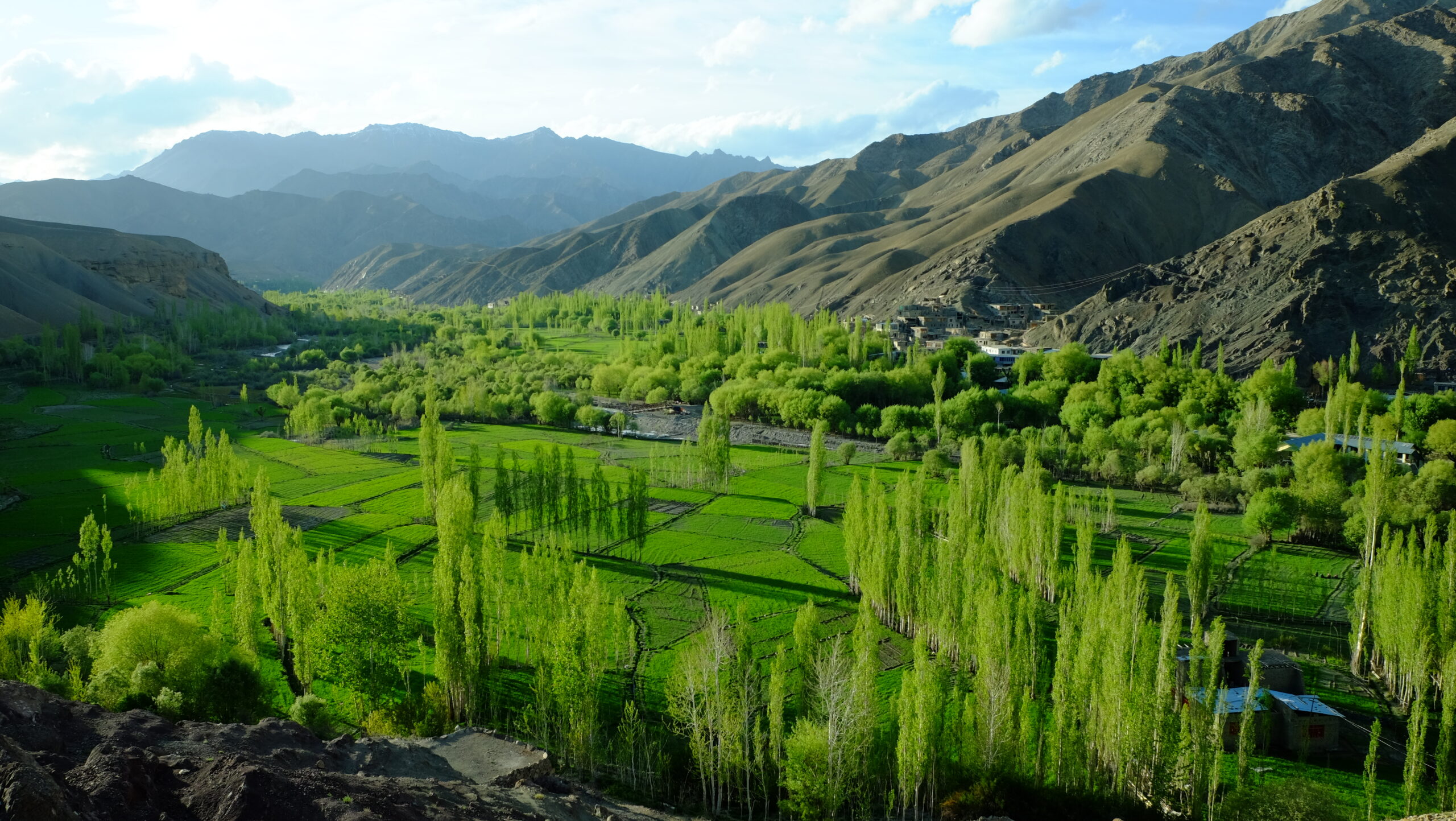
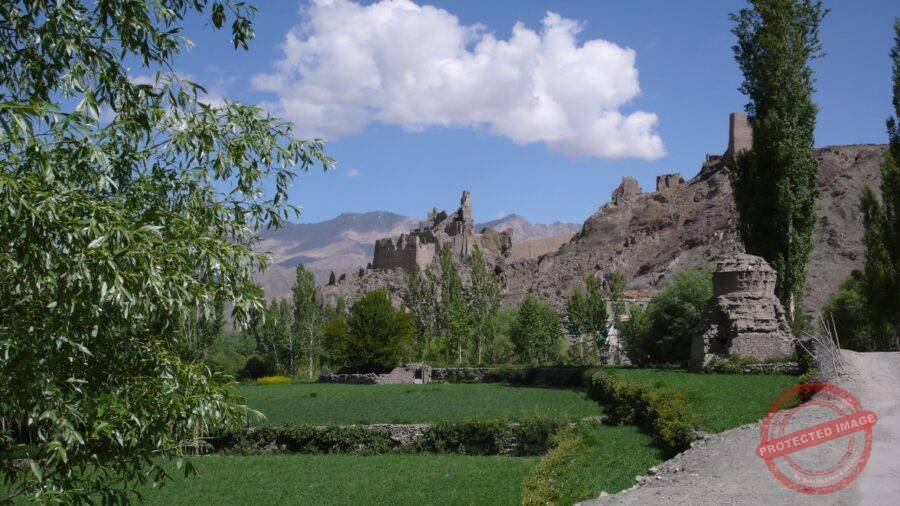
On an administrative table today, Chiktan is easy to locate. The government of Kargil lists it as a revenue village within Shakar-Chiktan. A line in a table can establish jurisdiction. It can place a village inside a district and a sub-division. It cannot tell you how the morning sounds.
My old notes can do that, but they have their own limitations.
They document separate stays in Chiktan across several years: 2010, 2011, a long series of entries from a return in 2013, and another stay in late May 2014. They do not prove that I lived there continuously for years. Memory has a habit of joining separate seasons into one long stretch of weather. The dated pages resist that temptation.
What they show instead is repetition.
In May 2011, I was washing clothes beside a local watercourse when I heard animals coming from below. By the time I understood how many there were, I had little room to do anything except get out of the way. Sheep and goats poured past. Some stepped over the clothes I had been washing. They moved up the valley toward the grazing grounds, and I followed.
The scene would be easy to turn into a postcard: a Himalayan village, a river, animals moving toward summer pasture. But the detail that feels truest is the dirty laundry.
The animals were not there to complete a landscape. They were going to work, and I happened to be in the way.
Farther up the watercourse that morning, I heard children reciting. I looked into a household yard and found a group gathered with copies of the Quran for an early study session. The sound had reached me before the scene did. It was not an event arranged for outsiders, and I was not its audience. It was simply another part of the morning, occurring at the same time as the herding, the washing and the first movements through the village.
That was how familiarity accumulated in Chiktan. Not through one extraordinary day, but through ordinary things recurring until they formed a map: the direction animals moved in the morning, where water ran, which houses had someone sitting outside, which path opened into fields, when the village grew noisy, when it went quiet.
A traveller often remembers a place by its landmarks. A person who returns begins to remember where life happens between them.
Repetition reduced the inventory. I stopped treating every meal as information and every animal crossing the road as a photograph waiting to happen.
The village no longer had to perform difference in order to hold my attention.
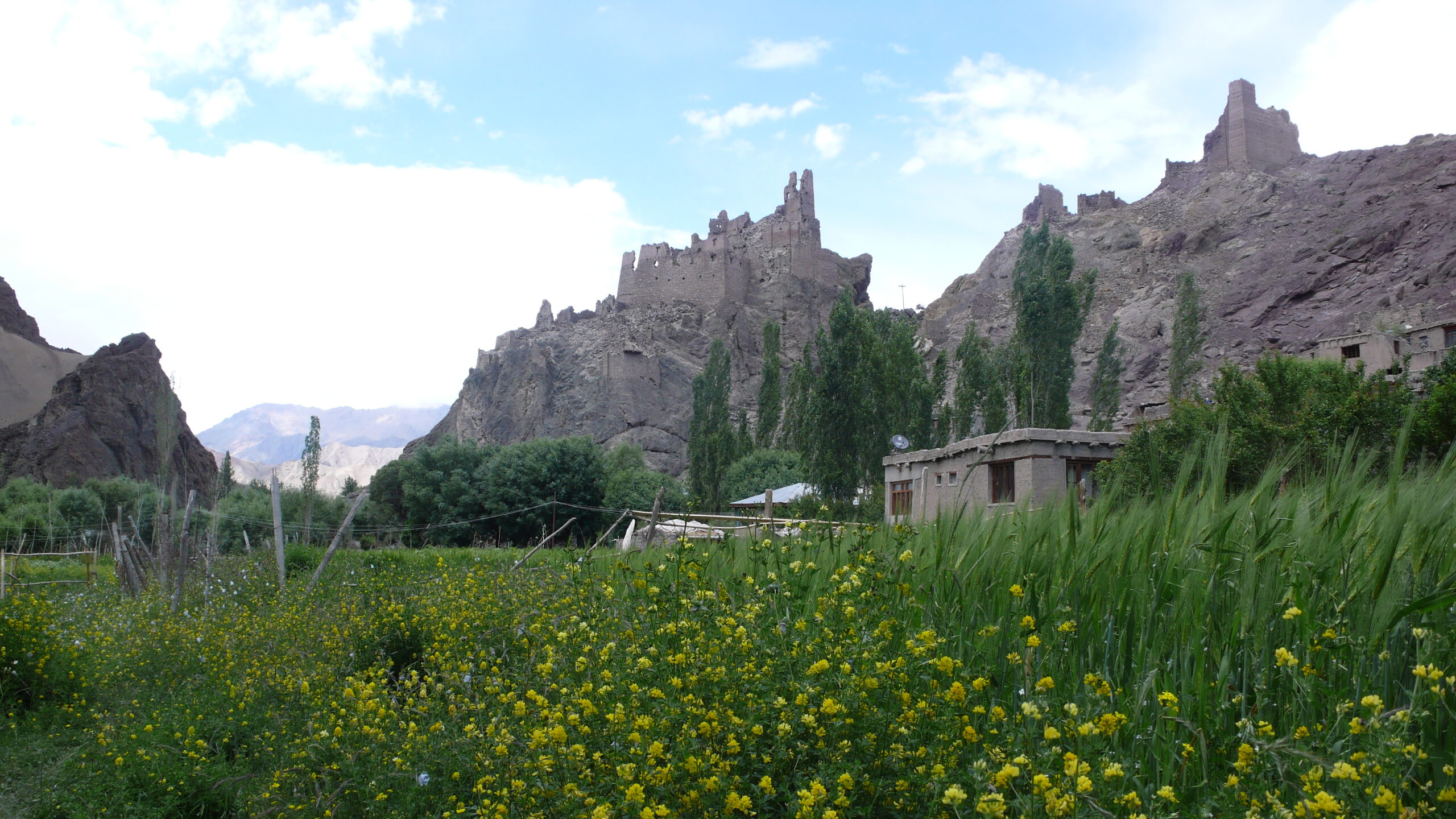
In late September 2013, I came back from Kargil.
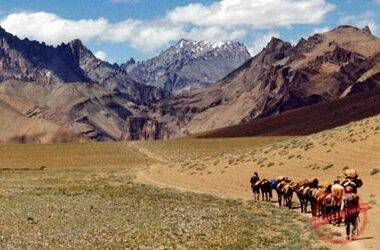
The shared vehicle left the town and climbed eastward. After Khangral we turned away from the main road and followed Kanji Nala deeper into the valley. Autumn had begun to show itself in the trees. By the time I reached Chiktan, the light was already moving toward evening.
Sheep and goats were coming down from the hills.
Their feet and bells mixed with the voices of children somewhere inside the village. The sound reached me before I had properly re-entered the lanes. In the blog entry I wrote after that arrival, the emotional fact is unmistakable: I was no longer describing a discovery. I was describing a return.
This difference is small in language and enormous in experience.
Remote places are often written about as if remoteness were their defining condition. The person arriving from elsewhere measures distance, then assumes that distance belongs to the people who live there. A village becomes “far away” because it was far away from us.
But people in Chiktan were not living at the end of my journey. They were living at the beginning of their own mornings.
The more often I returned, the less useful the word remote became.
I knew the mosque could wake me. I knew animals would move through the village. I knew that a river or irrigation channel that looked picturesque to a visitor was also where clothes were washed and fields depended on water. I knew that waiting for transport could consume a morning, and that a meal might begin before anyone needed to decide what the day was supposed to become.
Knowing these things did not make me a villager. Familiarity is not citizenship. Being welcomed into a household does not transfer ownership of its stories. I was still a Japanese man who had arrived from elsewhere, who could leave, who wrote about what he saw.
That distinction matters more to me now than it did when I was younger.
But there is another truth beside it: an outsider can remain an outsider and still become attached to the ordinary life of a place.
The two facts do not cancel each other.
I am cautious with that word—return—because it can easily become sentimental. To return somewhere is not the same as to be from there. I could leave. I could go back to Japan. I could turn experience into writing.
Those freedoms travelled with me even when I was sleeping in a village room or carrying a sack from a field.
Chiktan was not mine.
The fact that it began to feel familiar was mine.
One morning during the 2013 stay, a child in the household asked me to come to the school at ten.
I arrived a few minutes early.
Students were standing in the school ground with the building behind them. In front stood a young teacher holding an acoustic guitar. He began to play, and the sound travelled out into the open valley. The children sang.
I had been to the school before. On an earlier visit I had written with frustration about finding students studying by themselves when teachers were absent. Now the scene was different: a teacher with a guitar, children singing beneath the open sky, visitors moving around the grounds.
My younger self wanted to make the change mean something large.
The old blog does exactly that. It rushes from the schoolyard toward arguments about modernization, outside influence, development and the future of village life. Reading those passages now, I recognize the impulse. When we care about a place, we often become impatient to explain it.
The scene itself needs much less help.
A guitar was played. Children sang. I had seen the school before, and it was not the same.
That is enough.
The temptation to turn every difference into a theory is one danger of returning. The first visit encourages exaggeration because everything appears new. Repeated visits create another risk: believing familiarity gives us the authority to diagnose change.
It does not.
Some changes are visible. Others are seasonal. Others belong to one household, one teacher, one year. What feels enormous to a visitor may be minor to residents, while transformations outsiders barely notice may alter everyday life.
The old entries preserve my certainty. Time has made me more interested in the uncertainty around it.

The moments I trust most are the ones in which I was too busy to explain.
One afternoon I helped harvest turnips.
We had walked along the watercourse and through narrow lanes until the houses gave way to fields. The turnips did not appear in tidy rows. They were pulled by hand or dug out with hoes, the dirt knocked away, then pushed into large sacks.
Children joined in.
Sometimes a hoe struck a turnip instead of the soil and split it. The broken pieces were collected too.
When a sack was full, I carried it toward the house and up to the roof. The stairs were steep. Loaded with turnips, I had to lean forward and concentrate on keeping my balance. I went back down and carried another sack, and then another.
On the roof, the work changed. Small hand axes came out. The turnips were cut into rough pieces and spread to dry for winter.
I was slower and more careful than everyone else.
My pieces came out suspiciously even.
Around me, hands that had done this many times moved faster. Axes came down. Pieces scattered. The work did not need to be beautiful.
When it was finished, there was tea.
If I had visited for a day, I might have photographed the field and written about the harvest. Because I was staying, I carried sacks.
This is a modest distinction, and I do not want to exaggerate it. Carrying vegetables does not erase the distance between guest and resident. It does not make labor picturesque, and it certainly does not make temporary participation equal to the responsibilities of the people whose winter food was being prepared.
But it changes the memory.
The field is no longer only green. It has weight.
The stairs are steep because I remember climbing them under a sack.
The roof is not merely a rooftop in a photograph. It is where the turnips were cut and left to dry.
A place becomes ordinary when its nouns acquire verbs.
Many of my strongest memories of Chiktan contain very little talking: an axe hitting a turnip, a sack scraping against a stair, animals in a lane, tea after work.
The turnips do not need to symbolize resilience. They were food.
River becomes washing.
Roof becomes drying.
Road becomes waiting.
Field becomes carrying.
Home becomes leaving and coming back.

When I returned again in late May 2014, spring had arrived cautiously.
In the household where I was staying, there were newborn sheep, goats and cattle. The animals had their own two-level structure built from stone and earth: cattle below, sheep and goats above. Stone steps allowed the smaller animals to climb to the upper floor.
In the morning they came down and went out with the herder. In the evening they climbed back up.
I had now seen Chiktan in different seasons. The archive contains cold February mornings, spring herding, autumn fields and several departures and returns. This is where memory tries hardest to cheat.
It takes separate visits and makes one village.
It takes animals from May, a river from February, turnips from autumn, schoolchildren from another year, and places them beneath the same sky.
Perhaps that is what memory is supposed to do. Writing has a different responsibility.
The old pages remind me that these moments did not happen at once. The village I carry in my head is a composite. Chiktan itself continued every day between my arrivals and after my departures, without needing to resemble the version I remembered.
That knowledge does not weaken attachment.
It makes attachment more precise.
I do not need to claim that Chiktan was untouched or timeless, or that people there possessed some secret simplicity the rest of the world had lost.
The Chiktan in my notes is more interesting than that.
It contains cold water and dirty clothes. Children study. Teachers arrive or do not arrive. Animals need feeding. Crops need harvesting. People wait for buses. Houses fill and empty. Prayer is heard through a wall. Tea appears after work.
None of this requires the village to stand outside time.
There is a particular vanity in the phrase “I found this place.”
I understand it because I once wrote that way.
Travel encourages the grammar of discovery. We find a village. We discover a trail. We stumble upon a monastery. The world seems to come into existence when the traveller arrives.
Returning repeatedly to Chiktan slowly damaged that grammar.
The village was always ahead of me.
Before I woke, someone was already awake.
Before I reached the river, water had already been moving.
Before I noticed the animals, they had already been gathered.
Before I arrived at the school, children already had their own morning.
Before I came to help with the turnips, the winter ahead had already determined what needed to be done.
I was not discovering the life of the village. I was occasionally being admitted to its timetable.
This is a less heroic way to travel.
I prefer it.
Eventually there was always a morning to leave.
In the departure recorded at the end of my 2013 Chiktan series, I waited for the local bus while the sun was still working its way over the mountains.
The bus was old and late.
Only a handful of villagers boarded with me when it finally came. We followed Kanji Nala toward Khangral, the junction where the road from Chiktan met the larger route. There I got off to wait for transport toward Leh.
A mother and daughter were waiting too.
They took taki, the local bread, from a bag and ate while they waited.
If someone asked me now for the great image of Chiktan, I could choose mountains, the valley, livestock pouring down a road, or old walls against the sky. What returns instead is a piece of bread taken from a bag while two people wait.
I do not know where the mother and daughter were going that day or what happened when they arrived.
The gap is part of the memory.
There are forms of waiting in which time becomes the main subject. This was not one of them. Nothing suggested urgency. Morning sunlight had reached the fields. People stood by the road. Food came out of a bag.
Then another sound approached.
Not a bus.
Sheep and goats filled the road, moving toward us in a loose mass. Shepherds followed. Bells sounded among the animals as they passed.
Only after they had gone did a bus appear.
It was crowded. I put my larger bag on the roof and found a place inside.
That journey would continue toward Leh, through the larger machinery of Ladakh travel: highways, passes, checkpoints, towns. In my memory, leaving Chiktan happens before any of that.
It happens at Khangral.
A mother and daughter eat bread.
Animals occupy the road.
Someone is waiting for a bus.
More than a decade later, these are the details that survive.
Not because they were extraordinary.
Because, by then, they were not.

 sagi
sagi


 Writer